An Ottawa deck spends months under snow. It goes through freeze and thaw, spring melt and wet falls before it ever sees a barbecue. So when homeowners ask us about the best deck material for Ottawa winters, they really want to know one thing: what will still look good, and stay solid, after years of that?
There are four main choices: composite, PVC, pressure-treated wood and cedar. Each one can work here. They differ in price, in how much upkeep they ask for each spring, and in how they handle moisture and snow. This guide compares them side by side, with our real installed prices.
What an Ottawa winter does to a deck
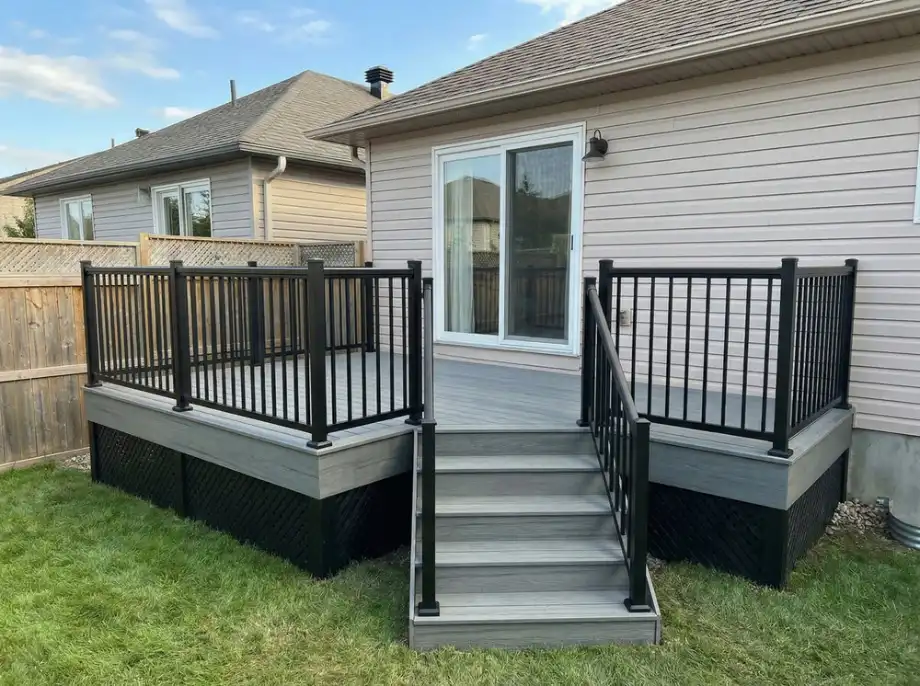
Before comparing materials, it helps to know what they are up against.
- Freeze and thaw. Water gets into wood, freezes, expands and thaws again, many times a season. Over the years that is what opens checks and cracks and makes boards cup and twist.
- Snow sitting for weeks. Snow keeps the surface wet. Wood that stays damp breaks down faster. Real Cedar puts it simply: a deck that dries after wetting lasts longer than one that stays damp.
- Spring cleanup. When the snow melts, it leaves grime, leaves and sometimes mildew behind. Every material needs a wash. Wood also needs its finish checked.
- Shovels and ice melt. How you clear the deck matters as much as the boards themselves. More on that below.
Deck material prices in Ottawa (2026)
Here are our typical installed price ranges in Ottawa, before tax, for the decking:
- Pressure-treated: about $30 to $45 per square foot
- Cedar: about $50 to $70 per square foot
- Composite: about $65 to $100+ per square foot
- PVC: about $85 to $120+ per square foot
Railing is priced separately by the linear foot: wood about $60 to $80, aluminum about $90 to $140 and glass about $180 to $250. Stairs add $800 to $1,800 for 1 to 4 steps, or $2,500 to $5,500 for a full flight.
Height, site access, permits and design details all change the final number. Our deck cost calculator gives you a quick range for your own size and material.
Pressure-treated wood: lowest price, most upkeep
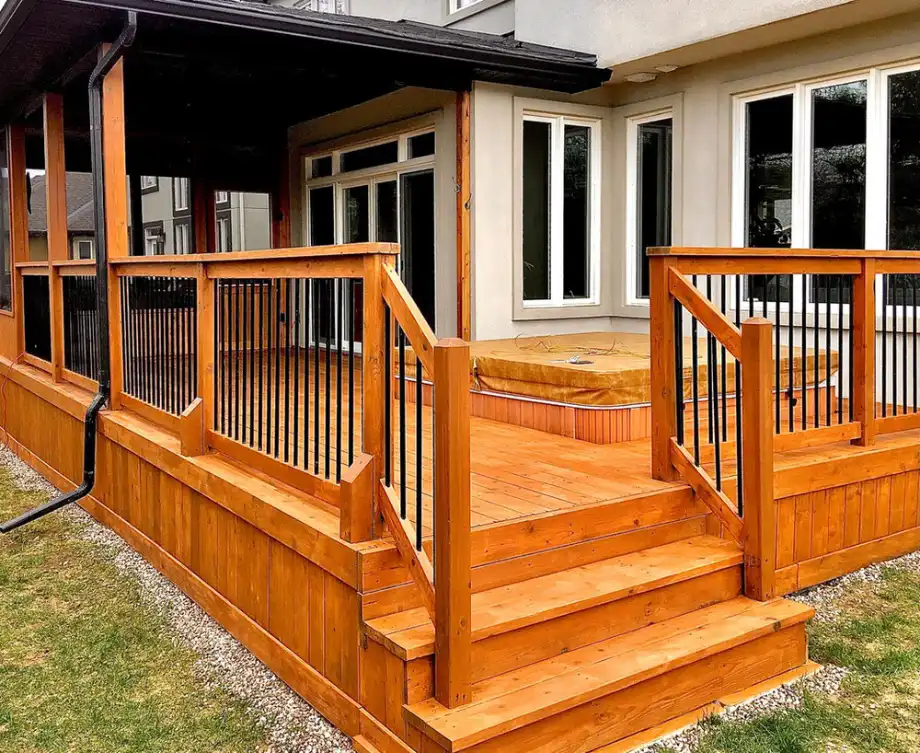
Pressure-treated lumber is the most affordable deck in Ottawa. It is strong, easy to work with and a solid choice for many backyards, including rentals and budget builds.
The trade-off is maintenance, and winter is the reason.
- Clean every spring to remove mildew and the grime left by snowmelt.
- Re-stain or seal every couple of years to slow greying, checking and splinters.
- Expect some movement. Through freeze and thaw, boards can cup, twist and loosen, so plan for the odd board or fastener repair.
Kept up, a pressure-treated deck serves well. Left alone, Ottawa winters age it fast.
Cedar: natural beauty with regular care
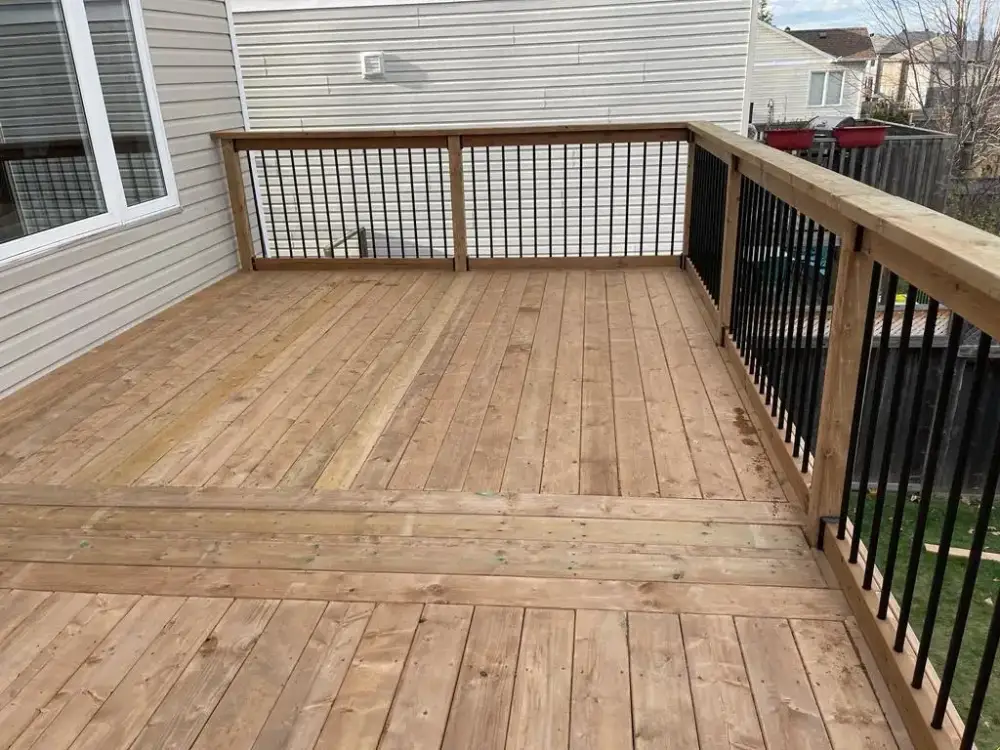
Cedar is the warm, classic wood deck. According to Real Cedar, Western Red Cedar is naturally resistant to rot, decay and insects.
Cedar still needs a finish to keep its colour. Real Cedar says a transparent stain lasts one or two years, depending on exposure. Without a finish, cedar weathers to a silver grey. Some owners love that look. Either way, the deck has to be able to dry out after rain and snow.
For Ottawa winters, cedar is a good step up from pressure-treated if you love real wood and do not mind a regular staining routine. Our deck staining service can take that job off your list.
Composite: the best deck material for Ottawa winters for most homes
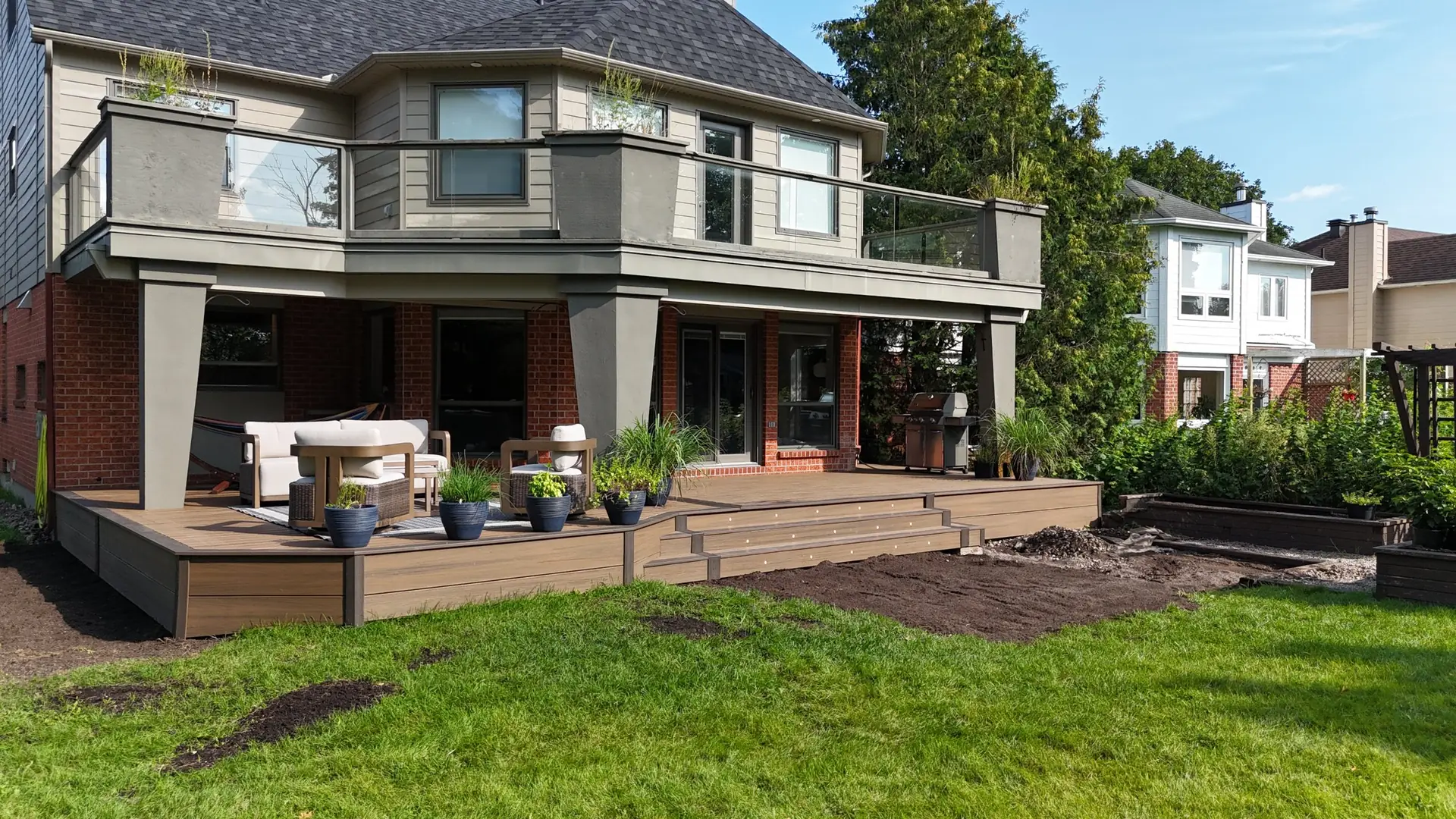
Composite decking blends wood fibres and plastic under a protective outer shell. It is the material we install most often in Ottawa, and winter is a big part of why.
- No staining or sealing, ever. A wash with soap and water once or twice a season is the main upkeep.
- Built for snow. Trex states that composite decking can withstand ice and snow without rotting.
- Rich colours. Greys, browns and wood tones, with matching fascia and skirting.
- Long warranties. Many leading composite brands back their boards with warranties of 25 years or longer. Terms vary by brand and product line, so read the one for the board you choose.
Composite costs more upfront than wood. Over the life of the deck you skip the stain, the sealer and most of the repairs. For a deeper look at pricing, see our guide to composite deck cost per square foot in Ottawa.
PVC: the premium pick for wet spots
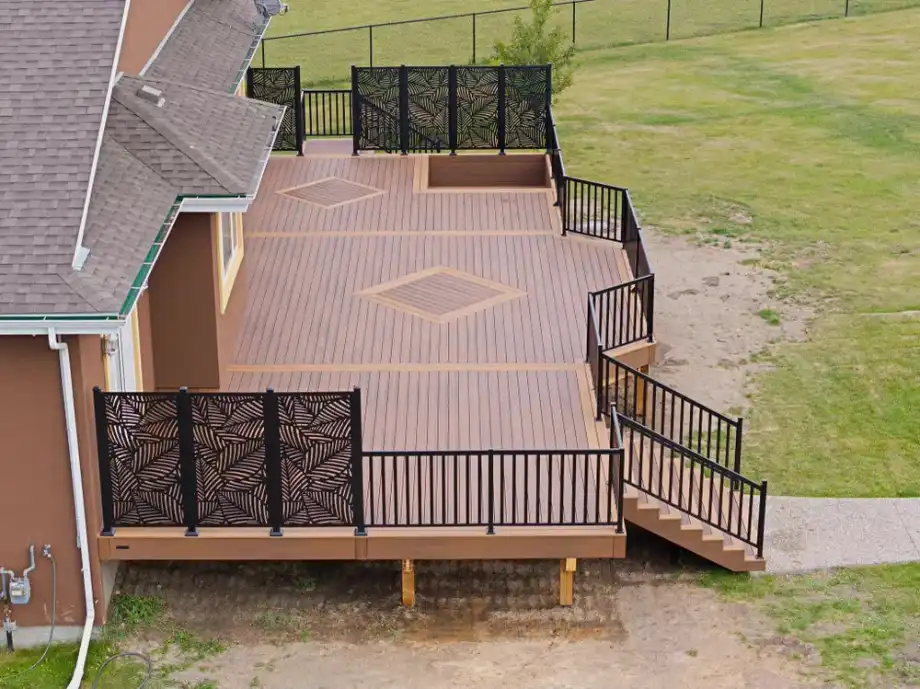
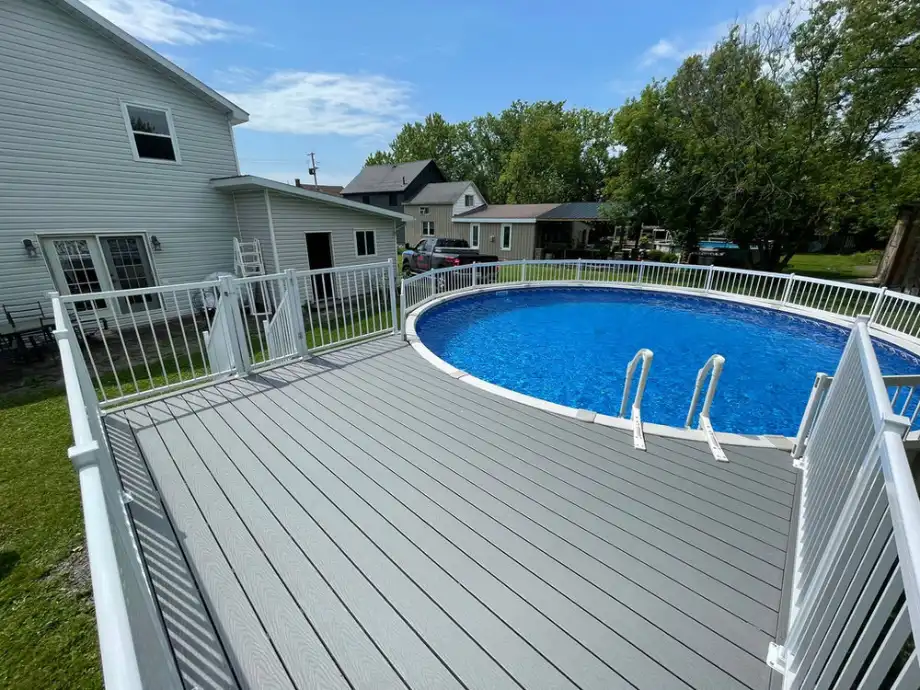
PVC decking contains no wood at all. It is fully waterproof and lighter than composite. That makes it the premium choice for decks near pools and hot tubs, and anywhere that stays damp, like a shaded yard or a low deck close to the ground.
Like composite, PVC never needs staining. It costs the most of the four materials, so most homeowners save it for the areas where moisture is a real concern. See our PVC decks in Stittsville and PVC decks in Barrhaven for more.
A note on board movement
Composite and PVC boards expand and contract with temperature. The gap between boards depends on the temperature on install day and on each manufacturer's guide. Our crew follows that guide on every job, which is part of why these decks hold up through Ottawa's swings from summer heat to deep cold.
Snow removal tips for each deck material
Whichever material you pick, a little care in winter keeps it looking good.
- Use a plastic shovel on composite and PVC. Trex, TimberTech and Fiberon all warn that metal shovels can damage composite boards.
- Shovel along the boards, not across them. Trex and Fiberon both say pushing with the length of the boards reduces dings and dents.
- Use a broom or leaf blower for light snow. No need to shovel a dusting.
- Check your brand before using ice melt. Advice differs. Trex says calcium chloride or rock salt can be used on its current board lines. TimberTech says to use calcium chloride and not rock salt on any deck, wood included. Read your board's care guide, and rinse leftover residue in spring.
- Skip the sand. It is abrasive and scratches the surface.
- Keep a clear path to your stairs, and clear snow from wood decks regularly so they can dry.
Removing all the snow is not required on a properly built deck. Keeping it under control simply makes spring cleanup easier.
What lies underneath matters too
The decking is what you see. The structure is what carries the snow. On most decks, composite and PVC included, the frame underneath is pressure-treated lumber. Ottawa's frost goes deep, so footings or helical piles have to be planned for it.
When a permit is required, the City of Ottawa reviews the drawings for the structure. Our guide to deck permits in Ottawa explains when you need one. If you want the older comparison of composite vs wood decking, that post is still a good read too.
Choosing the best deck material for Ottawa winters
- Lowest upfront cost: pressure-treated, if you are fine with spring cleaning and re-staining every couple of years.
- Real wood look with better natural rot resistance: cedar, with a regular stain routine.
- Least upkeep for the price: composite, the best fit for most Ottawa homes.
- Pools, hot tubs and damp yards: PVC.
Many decks mix materials. A composite deck with an aluminum railing and a PVC section around a hot tub is a common combination. Browse the gallery for ideas.
Why Ottawa Deck Pro
We are a family-owned team based in Stittsville, with over 50 years of combined experience. We are WSIB covered, carry $5M in liability insurance and back our work with a 2-year workmanship warranty. We design every deck in 3D first, so you can compare materials and colours before we build, then our own crew builds exactly what you approved. Read what clients say on our reviews page.
We build composite, PVC, cedar and pressure-treated decks across Ottawa, including Kanata and Barrhaven. Request your free estimate and we will get back to you within 1 business day.